Author: Dan

  • World Population Growth in the Past Century Will Astound You

    World Population Growth in the Past Century Will Astound You

    While it’s no secret to sociologists, many of us don’t realize just how much the world population has grown in the past century. I was back in college in 2018 and taking an online general class when I found out that the world population had reached over 7.6 billion people. When I was a kid in the early 2000’s, the number I always heard in school was 6 billion. That seemed like a lot. According to the United Nations, we’ve reached 8 billion in 2022. Earth now has more than twice the population it had when my parents were children in the 1960’s.

    Back in the sixties, science fiction was on the rise in mainstream popularity thanks to Arthur C. Clark’s and Stanley Kubrick’s story 2001: A Space Odyssey. In the novel, Clark’s character Dr. Heywood Floyd reminisces about how Earth had reached over 6 billion people and how it brought on challenges such as food shortages:

    “Though birth control was cheap, reliable, and endorsed by all the main religions, it had come too late; the population of the world was now six billion…As a result, food was short in every country; even the United States had meatless days, and a widespread famine was predicted within fifteen years, despite heroic efforts to farm the sea and to develop synthetic foods.”

    2001: A Space Odyssey Chapter 7: Page 44

    First of all, major props to Arthur C. Clark for accurately predicting the world population growth by the new millennium. I often forget while reading this novel that it was written so long ago, and in the campy time of science fiction that brought us classics like Star Trek. Science fiction back during the Cold War often focused on the issue of overpopulation. People were afraid that the human race was having too many babies, and that too many babies were growing to live full lives and have even more babies. In Clark’s time, just over 3 billion people lived on the Earth, and that was 3 times more than the year 1800. Before that, the world had never seen more than a billion at a time. Naturally, this freaked scientists out, and provided wonderful story fuel for speculative authors.

    I lived through the year 2001, and while it was a rocky year in terms of world events, we didn’t starve, and 22 years later I have yet to have any “meatless days” that weren’t an individual choice (Hey, I really like animals).

    Now, before you start thinking that world population is going to soar into the double digit billions, you should know that the growth rate is actually plateauing. The United Nations predicts that it will take until 2037 to reach 9 billion and we will reach 10 billion during the late 2050’s. Population growth is on the decline. We’re still growing, but not at the rate of our grandparents’ generations.

    10 billion people is a lot, and it’s crazy to think that I might witness the world get that dense during my lifetime. Climate change is on the rise, and we do feel that in my hometown where draughts have made the lakes I’ve swam in my whole life recede past recognition, and may even soon make the air poisonous. I wonder if part of the reason we can’t sustain our water supply is because so many more people are using the water. The world’s population is more than twice as big as it was when my parents were born. That’s nuts. In retrospect, perhaps world problems aren’t as dramatic as Clark predicted, but there are measurable effects.

    If you want to educate yourself more on the history of population growth, visit the United Nations website on global issues, the website I used to write as a reference for this article. I believe it’s important to familiarize ourselves history like this so we can better understand where we are headed as the resident caretakers of our planet. My life goal is to enjoy and care for this world as much as I can during my short time on it. If you like this article and want to explore the outdoors and learn about life with me, consider reading more articles from my homepage where I talk about everything from hiking to dog training.


  • Tough Love: A Basic Training Story

    Tough Love: A Basic Training Story

    I can’t quite remember his name, it was like Higgins or something. That’s what I’ll call him anyway. We were a bunch of bald-headed privates in our first week of basic training. That sentence sounds funny out of context. The drill sergeants herded us under the tower we just repelled from for our next task, a high up obstacle course of ropes and nets that made my stomach flip upside down, in a good way.

    Higgins looked like he was gonna curl up and die. He stood barely over five feet tall, if that, and was skinny enough that the ugly glasses on his nose were his only distinguishing feature. The recruiter who brought him in must’ve really wanted that office backpack for good numbers or something, because this kid was never meant for the army. Weak body, zero resolve, you’ve gotta admire signing your life away but service should never be open to some people, especially an MOS like combat engineer. Brawn, assertiveness, confidence, all void in little Private Higgins. Maybe there’s a little circle of laughing recruiters in Hell somewhere. I can see it.

    The drill sergeants showed us how to do the course by doing it themselves, leading in patronizing example. I remember feeling a little overwhelmed, Basic was emotionally exhausting. I held my motivation close, though. Just home from living in South America and the craziness of that experience, I felt like I could conquer anything. I wanted to conquer everything.

    Higgins looked like a turtle without a shell that day. The drill sergeants took advantage, identifying him as the weakest member of the hundred-something group. 

    “Higgins! You’re first! Get up that rope!” [Edited and paraphrased for language]

    The rope came down from a near vertical wooden wall that led to the rest of the obstacles. He grabbed hold and tried to climb. His arms trembled after a couple of feet and he stumbled down. He tried to mumble about not being able to do it, but the sound had a hard time getting out of the shaking frame wearing camo.

    Fast forward a few attempts, the biggest drill sergeant shook the ground as he stomped and screamed at the shaking private. “Higgins! I’m coming up behind you, and you do not want me to catch you!”

    We’d felt the drill sergeant’s hands before. The man was an ox of a human. He looked like he was birthed straight out of an 80’s action movie or a Gears of War video game. I still have a couple scars on my hip from where he tightened my repelling harness. “RUN HIGGINS! CLIMB!” We screamed in fear for his life.

    Higgins took to the rope like an Olympian, climbing with a strength he never knew he had. He did every obstacle with little hesitation, but quaking from shaved head to foot with the storm of a screaming real life action star thundering through the obstacles behind him. “I’m gonna get you Higgins! Don’t you dare stop!”

    The little private reached the bottom of the course in the glory of our cheering enthusiasm. We all couldn’t wait to get through the course ourselves. Suddenly it looked fun. It was also near time for chow and we wanted to finish and eat. Those ten minute meals were valuable. But that was some of the most pride of ever seen in someone’s eyes. The victory of little Higgins.

    There’s a moral to this story, and the reason I’ve been thinking about it. The scope of a person’s capability is only as strong as whatever is lighting his/her hind-parts on fire. Sometimes, a little tough love is the best thing you can do for someone.

    Fin

  • How to Stay Motivated in the Winter

    How to Stay Motivated in the Winter

    I wasn’t surprised to find out that people search more for how to stay motivated in the winter than they do the summer. Why do you think that is? For anyone, the reasons can vary. You might have low vitamin D and you need more sunshine, you might not workout as well in the winter, you might have seasonal affective disorder, or you might just hate being cold.

    Fortunately, it’s possible to boost your winter mood and stick out those goals you set in January. No matter what you’re working on, you can follow a few useful tips to nurture your mood and arouse within yourself a greater motivation to live your best life even in the darkness of winter. 

    First, let’s talk about light.

    Personal Photosynthesis

    Alright, scientifically, photosynthesis is a plant thing, right?

    Mostly. 

    Us humans get a significant amount of vitamin D from sunlight. Our evolutionary ancestors adapted to using sunshine for their personal health. Inheriting this adaptation, our skin literally makes vitamin D from direct exposure to the sun. There are other ways to ingest the vitamin, but the best way is exposure to the big yellow thing in the sky.

    Today, we’ve culturally adapted to staying indoors when it’s cold, and many of us live when the sun doesn’t shine as long as it does in the summer. When our bodies are missing vitamin D, we can feel off, unmotivated, and less healthy. What’s more, we can’t just sit by a sunny window. We have to be in the real ultraviolet, or no vitamin.

    However, there are a few hacks. Milk, some mushrooms, and fatty fish are good sources of vitamin D. So, if you’re feeling like you need a boost, eat a bowl of healthy cereal with milk, down some fortified mushrooms, or cook up a fish. Then, go for a walk outside. You’ll feel better.

    But light isn’t everything. Let’s discuss the awkward elephant, diet and exercise.

    Healthy Habits

    Winter can come with a decline in good habits. For me, it’s harder to be productive in the evening and go to the gym because it gets dark earlier. As the world gets darker, I get more tired and less motivated to pursue my fitness goals. If I want to be fit by the summer, I have to find ways to motivate myself to workout.

    Interestingly, workouts can be motivation for themselves. You show up to the workout and then the exercise will invigorate you and help energize you for everything else you have going on. The fact is that workouts make you feel better. That also goes back to evolutionary roots. Human beings are meant to move.

    One way to make sure you’re dieting properly is to eat in a way that your workouts feel good. If you’re overstuffed or not energized, you can look at what you’re consuming. A doctor can help you know what diet will be right for you. Everyone’s body is different, so it’s important to consult the professionals for the best and safest results. The same goes for working out.

    Seasonal Affective Disorder

    SAD affects a lot of people all over the world. As the seasons change, so does our physiological reaction to our environment. If you think you might have seasonal affective disorder, you should seek help. Medication, therapy, or whatever your doctor recommends can lead you to better winters of personal achievement which will contribute positively toward your overall happiness. There’s no shame in seeking psychological or emotional help. This is the millenial era, everyone goes to therapy. Find out more information about SAD here.

    Finding Simple Pleasures

    Ain’t that the truth? Most of us don’t like being cold. We want to bundle up with something delicious and a nice long TV binge. That’s kind of the theme of the season, to cuddle and hibernate your way through the winter months. Consumerism is high during this time as well, with everyone buying gifts and their own simple pleasures.

    Something to remember: the greatest pleasure can come from feeling accomplished. Once you’ve worked out, completed your goals, taken care of your loved ones, you’ll feel better about yourself and life. The simple pleasures of hot cocoa and holiday presents will sit better with you if you’ve earned them from your own productivity. Sometimes all it takes to stay motivated is to remember why you’re setting out to accomplish whatever it is you’re aiming for.

    Summed Up: Be Your Own Motivator

    Taking advantage of vitamin D, taking care of your body, and focusing on your mental health all go a long way toward helping you keep your motivation during winter. If you’re struggling, see what little things you can improve in those areas to keep your energy in the right place. You can do it, and Spring is just around the corner.

  • Visiting the Roman Baths in England

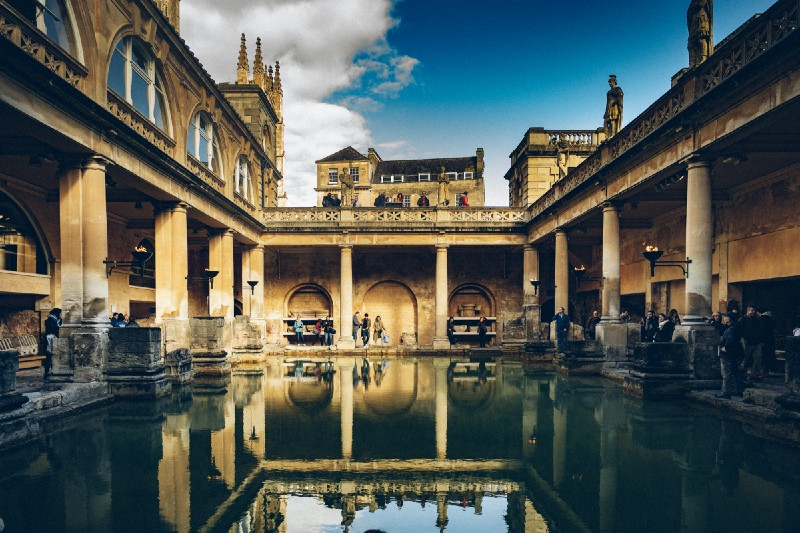
    In the West of England and 100 miles from London you find a treasure that’s thousands of years in the making: Old Roman Baths in a city called Bath that have brought multitudes both ancient and modern to witness priceless natural and archaeological wonders. People have emigrated to Bath since even before Roman times for England’s only hot springs as a place of healing and worship. When visiting Bath in 2022, I experienced an enlightening connection with history that I hope to share. Wherever we live as human beings, we tread our footsteps over the lives and legacies of billions. The Roman Baths help illustrate this with wonderfully preserved ruins that anyone can see…for a few pounds.

    Photo by Paul Cuoco on Unsplash

    Getting to Bath

    If you’re traveling from London, I would recommend renting a car. Renting a car can be pricy, especially if you’re limiting yourself to only automatic transmissions, but renting can be worth it if you plan on using Bath as a hub to travel to other locations. The car can also save you a lot of time. However, parking can be hard to find during peak visiting times. Bath is a major shopping destination and my group and I drove in right during the peak of Guy Fawkes Day. We found one public parking space after driving around several times. If it weren’t for Google Maps, which I would recommend as your main source of navigation, I think we might have circled that town for eternity.

    Knowing this, if you’re uncomfortable driving or you prefer public transportation, bus and train options are available. You can find them at:

    https://www.romanbaths.co.uk/visit

    This website is useful because they’ve simplified your choices to the most prudent. National Express has a bus service from the Heathrow and Gatwick airports and after a couple hours or so you’ll find yourself a five-minute walk from the Roman Baths.

    The train station is called Bath Spa, and the slowest but cheapest option is London Waterloo. More expensive but faster services are available.

    Photo by Suzi Kim on Unsplash

    What to Learn at the Baths

    Sulis Minerva: Photo by N C on Unsplash

    The Audio Tour of the Roman Baths in Bath offers an informative look into the lives of Roman people in about 60 AD. The Romans named the town Aquae Sulis, or the waters of Sulis, after the Celtic goddess worshipped at the hot springs before the romans arrived. The Romans associated Sulis with Minerva.

    Photo by Daniel Bradley

    The baths in Roman days were a complex system of pools of varying temperature for bathing. There’s evidence that people would come as a sort of pilgrimage from across the empire to experience the warm healing effects of the mineral water.

    Photo by Daniel Bradley

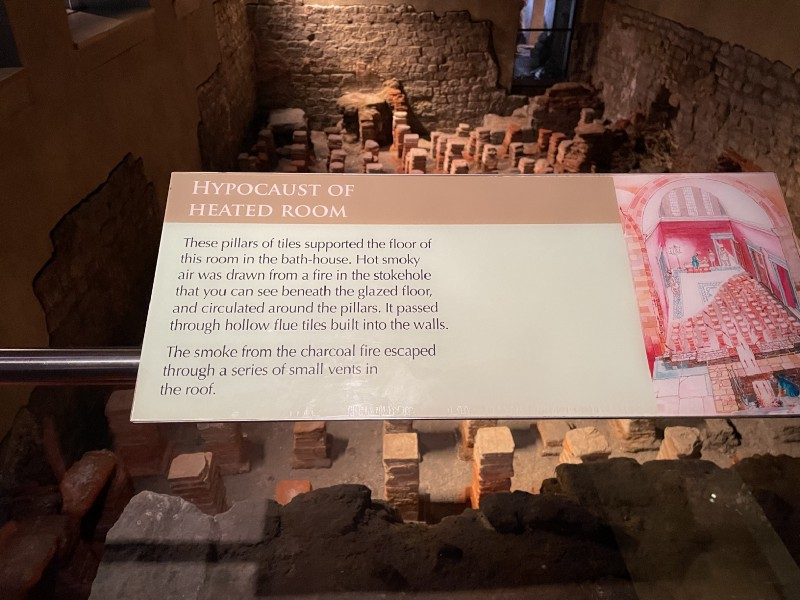
    They would even heat stones to make a hot floor for bathers.

    Photo by Daniel Bradley from the Roman Baths Museum in Bath

    These examples only touch a small part of the vast knowledge found under the ground at the Roman Baths. The real wholistic lesson I took away came from the overarching theme of syncretism.

    Natural Subterranean Syncretism

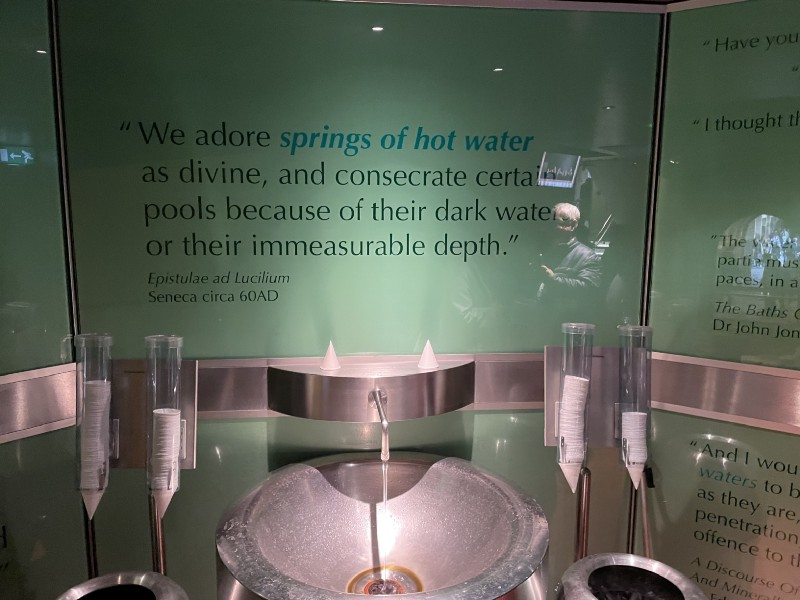
    At the end of the museum tour, we had the opportunity to drink the water after its purification. The walls around the fountain were full of quotes throughout history of the believed healing benefits:

    Photo by Daniel Bradley
    Photo by Daniel Bradley

    When I drank a cup of the water, I couldn’t help but feel the impact of an amalgamation ancient beliefs, whether I held them the same or not. I thought of the underground veins where the water passed through Celt, Roman, and British worlds under my feet. Studying the history and drinking the water felt like a temporal connection to the long dead, like I could honor them with a few bitter gulps of mineral water.

    Natural syncretism isn’t a forced interfaith dialogue or lesson, it’s simply existing alongside ghosts of the past. Visiting the Roman Baths brought me closer to my ancestors, British and Roman, in a way that I didn’t know possible. If you find yourself in or around London, consider taking a side-step westward toward Bath and see these sites for yourself. If you’re a history buff and creative minded like me, you’ll have the time of your life. I was so influenced by my experience that I’m using what I learned for an upcoming novel.

    For More Information

    I would advise visiting the site I posted above for travel information. Pricing I’m sure is subject to change as well as other visitation guidance. The most important thing is to educate yourself from real sources before going.

    For references, all my photos were taken by myself at the museum or borrowed from Unsplash and credit is given to the photographers for their expert work.

    We live in a rich world of a million billion legacies. I’m glad we have a place like the Roman Baths where we can learn to appreciate them.

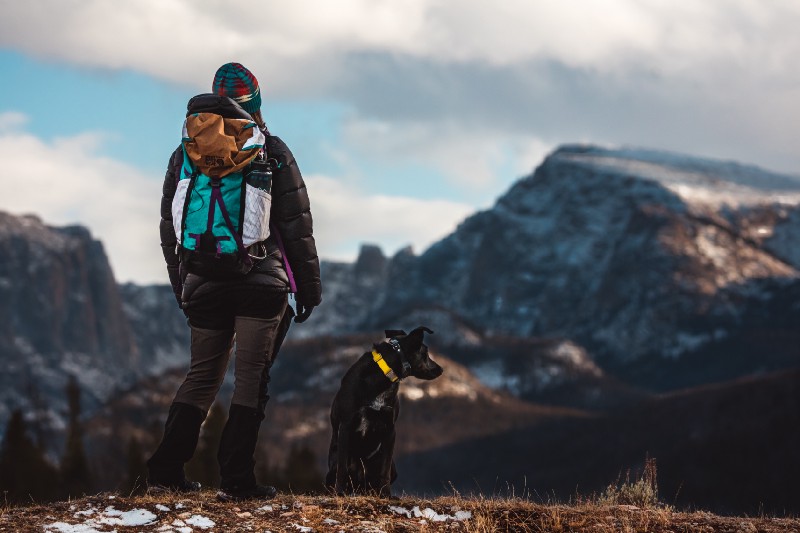
    Photo by K. Mitch Hodge on Unsplash
  • When It’s Okay to Take Your Dog Hiking Without a Leash

    When It’s Okay to Take Your Dog Hiking Without a Leash

    You’re out in the middle of nowhere on a beautiful trail into hills of paradise and you decide it’s time. You lean down, your dog smiles up at you. You take off the leash. Your pooch leaps up in delight and runs circles around you, smelling every bush and loving its little life. I love that feeling. My dog and I experience this all the time.

    So, is it okay to hike with my dog off-leash? It’s a very common internet question. Sometimes, although we don’t want it to be, the answer is no. Let’s talk about when it’s fine to explore without a leash, and when it’s best to keep it on. You have to think about your dog’s training, personality, and the risks and rules of the trail.

    Your Dog’s Behavior

    The longer you’re around dogs, the more you realize that each animal is unique. The first thing you should consider when thinking about taking the leash off on a hike is how well your pup is capable of listening to you. Don’t consider the breed, consider your actual dog, its personality and training.

    What kind of personality does it have? Is it friendly? Independent? If the dog will make you chase it to get the leash back on or bother other people and animals on the trail, its best if you keep your little friend tethered to your person. That way, you can best control your dog in any situation you may encounter.

    Photo by Zdeněk Macháček on Unsplash

    The wilderness is an unpredictable place. Let me tell you a story.

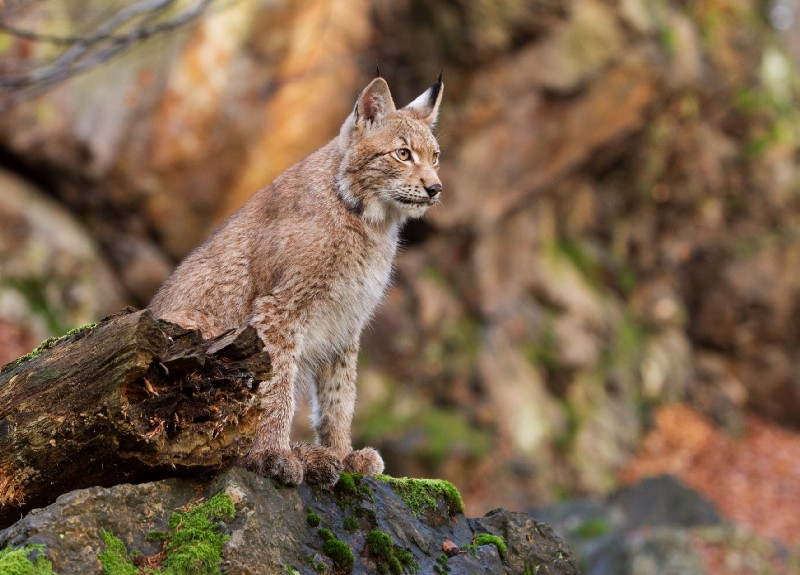
    One time my dog Arthur and I were hiking up Maple Canyon in Utah. Not even a mile from the campground, a large cat came out of the bushes about thirty feet or so in front of us, some kind of lynx or bobcat that was the same size as Arthur. At first I thought it was a cougar. Before I could call Arthur back, he shot after the cat like it was his new best friend and the two of them tore into the bushes. I was freaked out, but I firmly and calmly called to my dog to come back. He did, happy and unhurt.

    I was glad in that moment that I trained my dog to come back when called, or that situation could have escalated into something that I really don’t want to think about.

    Keep your dog trained for off-leash activities and you should be fine, but don’t forget that there are always risks.

    Risks of the Trail

    We’ve started to cover wildlife by talking about my lynx story. Out on the trail, you and your pup can find all kinds of animals. Many of these can view your dog as a threat. Rabies is another thing to think about. If you feel the wildlife risk is too much, what should you use?

    The leash! You have a leash. There’s nothing wrong with keeping it on.

    Another risk to consider is the terrain of the trail. You and your dog have different capabilities when it comes to climbing up and down rocks or walking next to cliffs. You’ll have to be the judge.

    Photo by photo nic on Unsplash

    Another story.

    One time Arthur ran past me really fast next to a very steep hill, one of those that’s practically a cliff. He didn’t mean to, but he ran into the back of my leg while I was standing on loose dirt and gravel and knocked me off the side. Luckily, I was able to stop myself a short ways down and climb back up, but not without a scare.

    These days, I make sure he’s always in front of me on steep hills. If the trail is too risky we go back to the leash life. That way, he still enjoys the hike and I don’t get knocked into a bottom slide toward oblivion.

    Rules of the Trail and Good Manners

    Contrary to what you may want, you and your dog aren’t alone on the trail. There are hikes close to me that I love where the way is often too crowded. I have to think about other users of the trail when I think about taking Arthur off his leash.

    You see, not everyone likes dogs. They might be afraid or they might have allergies. If the trail is too crowded, you should leash your dog. It’s good manners. Going back to behavior, no one wants the liability of their dog knocking over some poor person they decided to jump on or scaring a cyclist into a tree. Those are just some examples of what could go wrong.

    The internet is a great tool to find out the rules of almost any trail. I’ve found close to my house that if a trail is through a National Forest or Bureau of Land Management or something similar, leashes are required in campgrounds or parking lots but dogs can be released once out of those areas. You should check each trail online before you go and follow any posted signs along the way just to be safe. Safe is cool.

    Summed Up

    Off-leash hiking can be a wonderful experience for you and your dog. However, you should consider the precautions I’ve listed in this article before taking the big step of letting your dog roam free.

    1. Is the dog’s behavior suited for the activity?
    2. Is the trail good for free roaming dogs? (Minimal wildlife encounters, good terrain, etc.)
    3. Are you following the official rules of the trail and considering other people?

    If you can answer yes to those three questions, you’re in for some good fun with your best friend. Just make sure you stay alert and responsible. Happy hiking!

    Photo by Chewy on Unsplash

    If you like articles like this, buy this book! It can help you train any dog and learn the in’s and out’s of dog ownership without getting too complicated.