Author: Dan

  • How Writing is Like Painting

    How Writing is Like Painting

    Have you ever painted?

    You stand in front of a blank canvas, and quite often you have no idea what you’re going to create with it. You have some paints, they’re in a cardboard shoe box you keep in the cupboard with some tattered brushes and sponges, a paper plate is your pallet and it’s been working hard for longer than its intended shelf life. Dip dip, splash, you start painting something.

    Now have you ever written? You sit in front of a blank page, a blinking cursor or lines in a notebook. Your brain is the pallet, your fingers the brushes. Dip dip, splash, you start an opening line.

    “It was a dark and stormy night…”

    Nope, start again.

    Both writing and painting are done in strokes. You add color in layers, mixing them just right, sometimes wet so it blends, sometimes dry so the color pops like the center of a star. When someone looks at your art, their brain fills in the colors, the microscopic spaces between, and creates a representation of the reality depicted. In a way, the emotion a person experiences from your creativity belongs entirely to them, a construct inside their mind from brushstrokes of imaginative color.

    How is painting like writing?

    They say that a picture is worth a thousand words, but it’s also true that a few words paint a picture. Let’s look at the opening line of Metamorphosis by Franz Kafka.

    “As Gregor Samsa awoke one morning from uneasy dreams he found himself transformed in his bed into a gigantic insect.”

    Franz Kafka, Metamorphosis

    Do you see the painting? It isn’t perfectly realistic in your head. You see a man in a bed transformed into a giant insect. The author hasn’t told you what kind, but your mind is already starting to figure that out. I bet it looks different than my insect in my head. Like brushstrokes on a canvas, Kafka created a representation of reality, and your mind is initiating the response, emotion and color all painted into a fuzzy picture you can keep working on as the story continues.

    Bob Ross and Quick Strokes

    Bob Ross “Island in the Wilderness”

    Check out this video, you can skim around, just pay attention to the swiftness of his strokes. When he paints the trees, it doesn’t look like he’s creating photorealistic trees. He just creates something your mind can quickly interpret. You don’t see the print of the brush, you see a beautiful landscape. The same should go for your writing. Sometimes, the quicker the stroke, the more concisely packed the information, the better the broader image.

    For reference, let’s look at another example by our pal George Orwell in his novel 1984

    “It was a bright cold day in April, and the clocks were striking thirteen.”

    Are you getting the picture? You can feel the cool air where the sun doesn’t quite warm your skin, and a clock tower shows thirteen, and it makes you uncomfortable. But you can see other things can’t you? I can see an old fashioned street with warm April colors shining on dew over drab government buildings. He didn’t write any of that, but from the painted emotion of the first sentence, my mind goes to that street on its own.

    Why should we think about writing like painting?
    By Lucasz Szmigiel on Unsplash

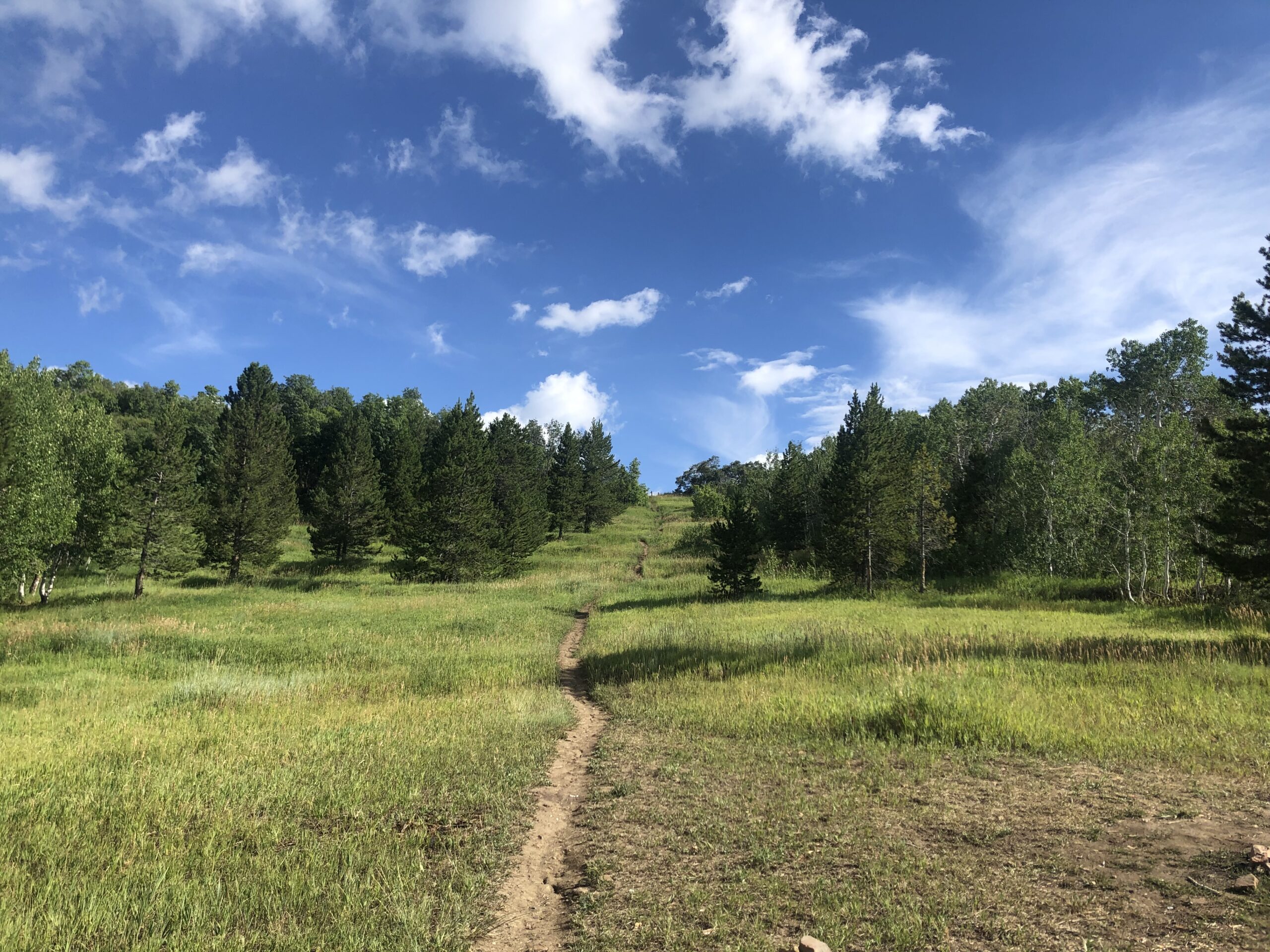
    Here’s one example of how thinking about writing as painting could help. When you paint a road, you have to know where the lines are going. Even though the intersecting sides of the road will never touch in the painting, the correct angle means you as the artist need to know at what point they will touch on the horizon. When you’re writing a story, there’s so much exposition you have to know as an author to make something believable. A character may only enter the story for a moment, but do you know the angle of their road? A line of dialogue may go unsaid, but do you know what the characters are thinking? Remember that the reader’s mind is continuing the images you started with your words. Even if some exposition only makes it to the white space resting between printed ink, the emotional direction of your story will benefit from your work on the angles. Your reader will arrive at the conclusions they should.

    In a nutshell

    I think about the concept that my writing is a moving portrait in the mind of my readers. Each brushstroke has to add, but not detract from my story. If something is suspenseful, my word-strokes are quick. If time slows down, my descriptions flow with the speed of perception in eternal moments. I also remember that if I cut something out of the writing, the lines of the road will better intersect, just like a painting.

    How do you see your writing? Does it feel like painting, or something else? Let me know, this is a discussion I’ve been wanting to have.
  • Hiking to Scout Cave in Snow Canyon near Saint George, Utah

    Hiking to Scout Cave in Snow Canyon near Saint George, Utah

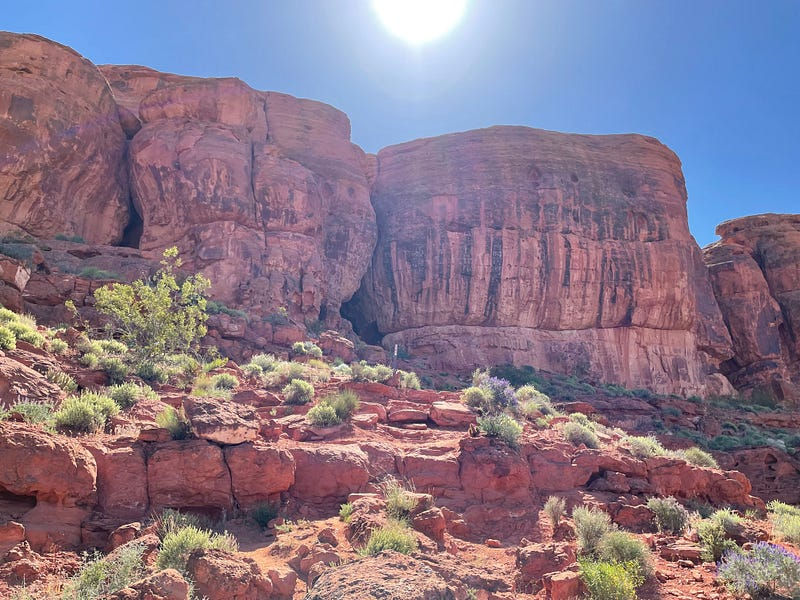
    Hiking up to Scout Cave is a simple and short activity to add to your must-visit category in Saint George, Utah. In this article, I’ll sum up where you can find it and some tips and tricks to help you have a good time and stay safe. Scout Cave is dog friendly, unlike many hikes in the area, so we’ll talk about furry friends too.

    Difficulty

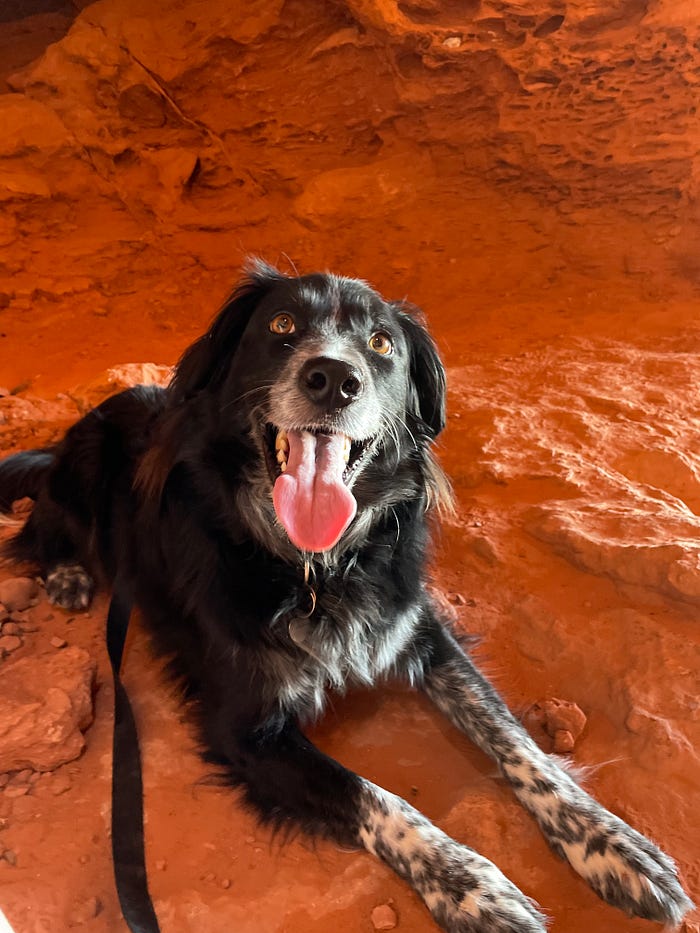
    Before you drive up to Snow Canyon, let’s talk about difficulty. If you are an experienced hiker and climber, Scout Cave will not give you any trouble. However, if you have any health problems or issues climbing a little, you should consult a doctor first. The same goes for your dog. Dogs that can’t climb will need to be carried up a few brief slopes. My border collie had no problem climbing on his own with a little guidance.

    Children outside of strollers can hike this trail without a problem, but should be closely monitored and assisted by adults. There are a lot of poky plants around and some insects. In the springtime, I got stung by a bee in the cave.

    Photo by Daniel Bradley

    Heat and Time of Day

    Scout Cave is best attempted in the morning or evening outside of the full blast of the afternoon sun. Dogs with thick fur coats should be watched closely and given plenty of water, as well as their humans. The heat can sneak up on you. It may feel moderate at 9 am and then by 10 or 11 you’re sweating buckets. Try to make it just after sunrise if you can. If you do leave later, it’s best if you leave your dog at home and bring lots and lots of water.

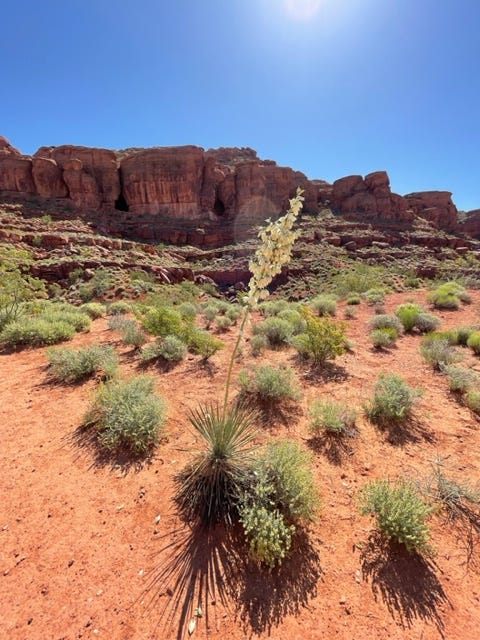
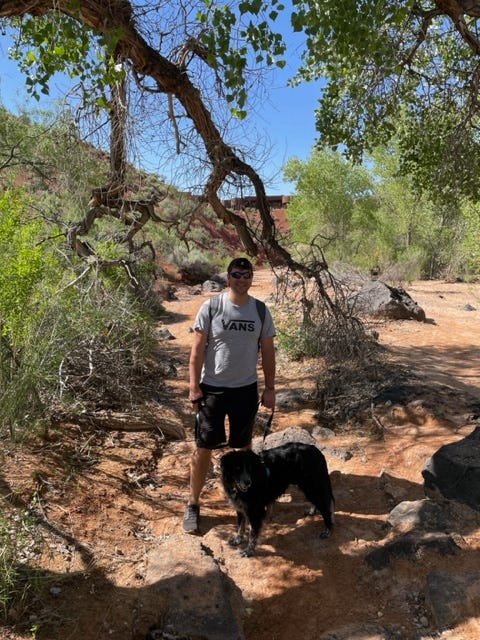
    This hike is almost completely without shade except for some trees near the bottom before you reach the stairs.

    Photo by Daniel Bradley

    Length

    Scout Cave is just under 3.6 miles round trip. Apart from a steep climb up some stairs and a few rocks to climb over, the trail is relatively flat and easy going. The terrain is rocks and sand and should be a little cooler for your pups paws than asphalt.

    Photo by Daniel Bradley

    Driving Directions

    Take exit 6 on I-15 onto Bluff Street and turn north toward Pine Valley Mountain. Continue for about 3 and a half miles. Turn left onto Snow Canyon Parkway and keep going for about 4 miles. On Snow Canyon Dr, turn right and continue 1 mile. You will see a Trailhead on your right across the street from where you can park.

    The Trail in a Nutshell

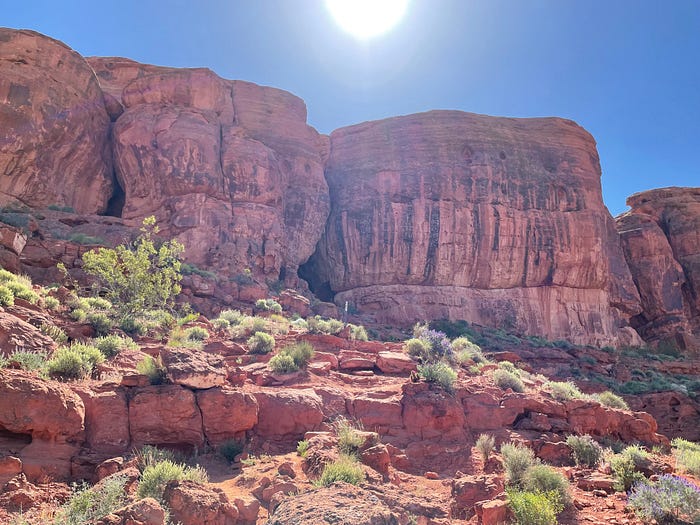
    The trail is straightforward enough. Cross the street from the parking lot and you’ll see the trailhead. Head toward the mountains in front of you. You’ll pass old lava flows and beautiful desert plant life. Eventually you’ll hit an intersection with the Johnson Canyon Trail. Turn right, following the Scout Cave trail and keep going to where the trail passes under some private housing. Follow the trail down to the area at the bottom with trees and sand.

    Photo by Daniel Bradley

    Make sure you’re drinking lots of water.

    The trail will head back uphill at some stairs. Take your time and be sure to not fall into any cacti. The trail will seem to end, but if you noticed, you’re on your way to the cave. Climb up the rocks and you’ll see that the trail continues upward. After the stairs, be sure to not turn right. There is an illegal trail heading into the canyon and that is not where you want to go.

    Photo by Daniel Bradley

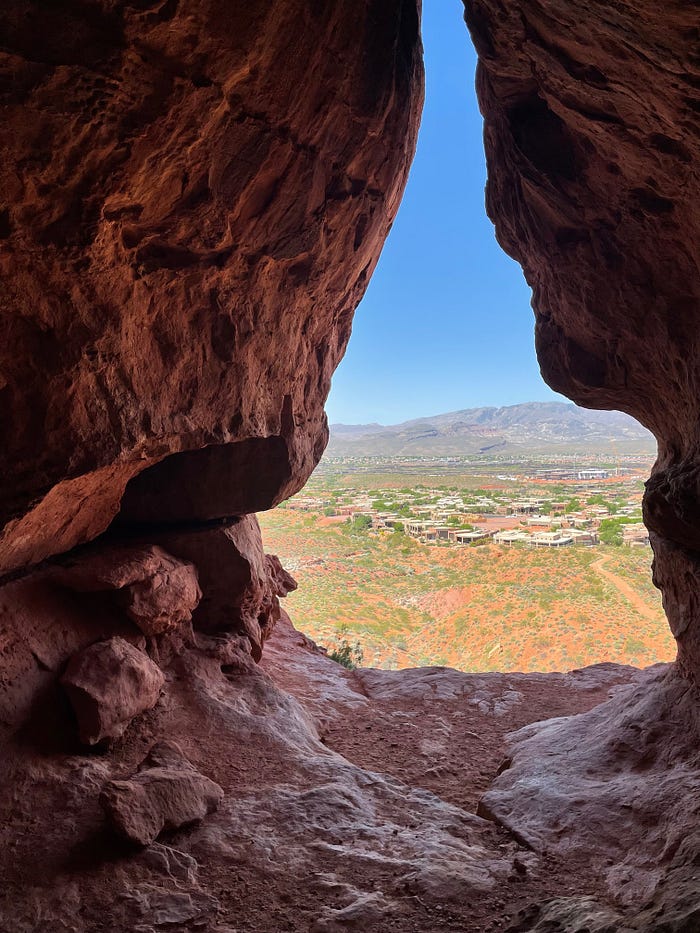
    Climb on up into the cave and enjoy the view!

    Also as I mentioned before, try not to get stung by any bees. My arm was swollen for two days.

    Photo by Daniel Bradley
    Photo by Daniel Bradley

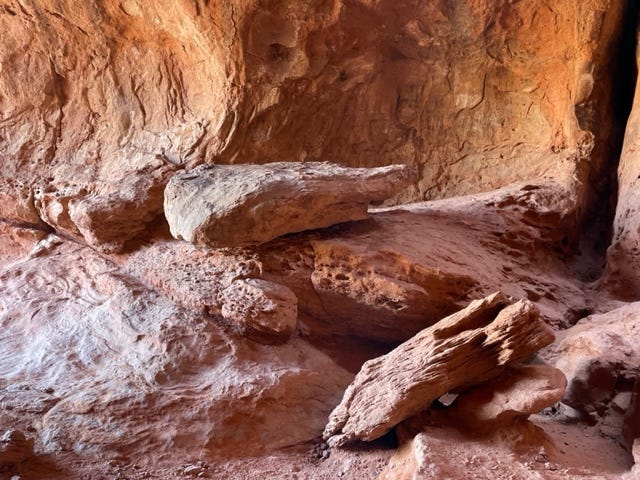
    The cave overlooks the valley below.

    Thanks for reading! If you enjoyed this article, find this one and more at:

    dbradleyexplores.com

    and my Youtube channel:

    https://www.youtube.com/@dbradleyexplores

  • 4 Types of Birds to See in Utah at the End of Winter

    4 Types of Birds to See in Utah at the End of Winter

    Have you ever thought you’d like to get in to bird watching? I have that thought every Spring, so I’ve compiled a short list to help us get started. Utah is home to many gorgeous birds, particularly in the Spring and Summer before winter migrations. Whether you’re a Utah native or a visitor enjoying a nice desert or mountain vacation, here are some special avian friends to look out for.

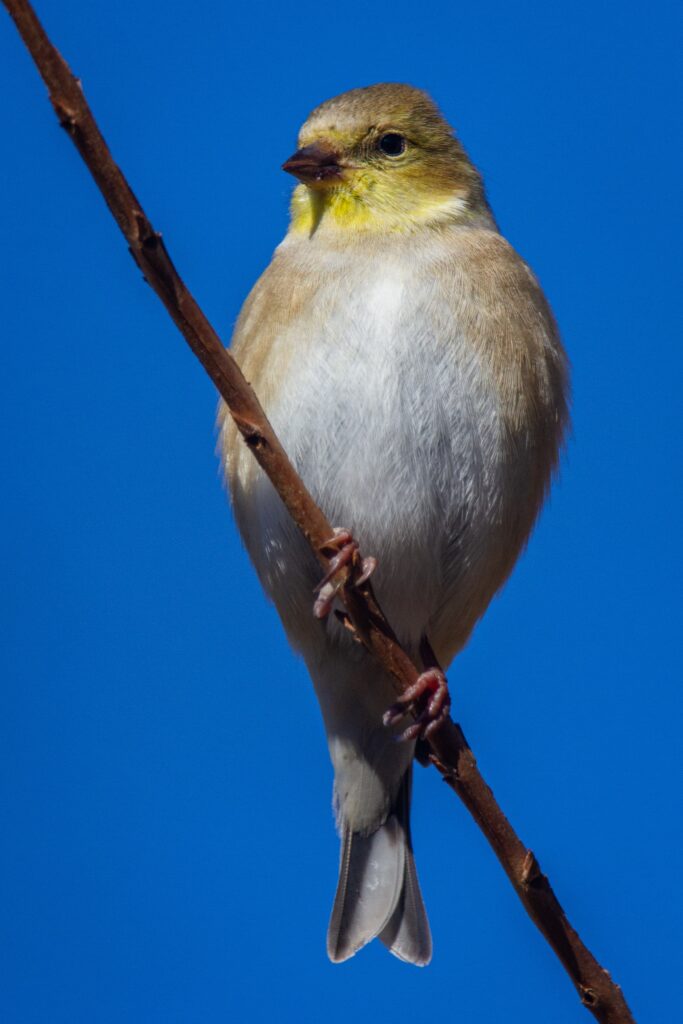
    1. American Goldfinch:

    Photo by Joshua J. Cotten on Unsplash

    These birds are beautiful, and actually spend a significant part of the year molting. They adopt a blander version of the yellow for the winter to avoid being eaten by predators. They forage on the ground and nest in the trees, so look for them eating in lower vegetation.

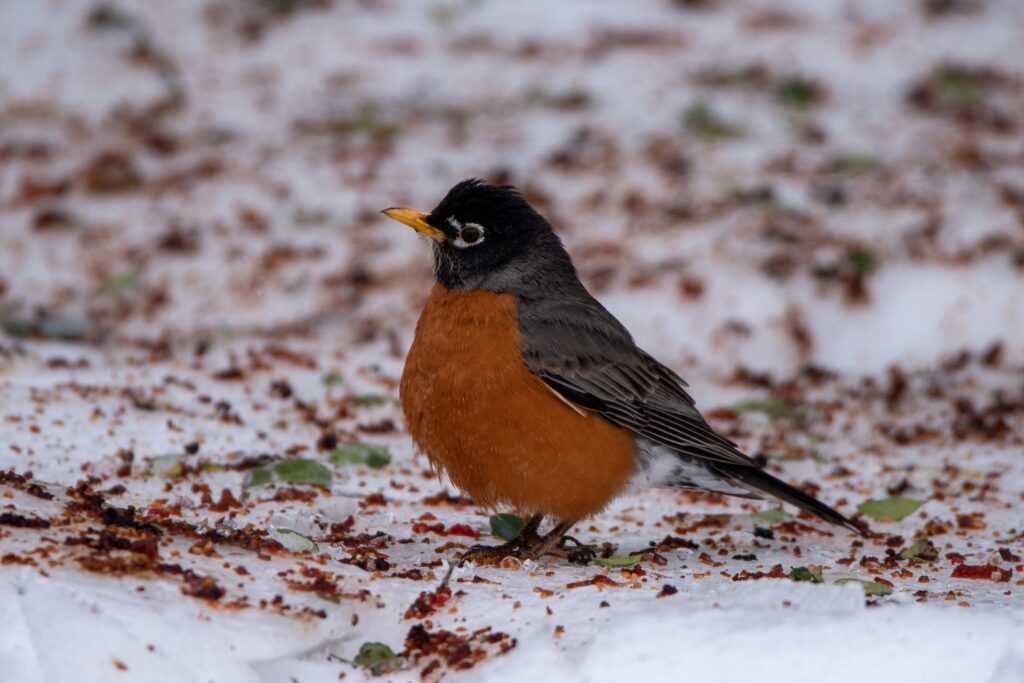
    2. American Robin

    Photo by Trac Vu on Unsplash

    The American Robin makes its appearance at the end of winter, hunting for worms across every lawn in the state. Robins are easily distinguished from other birds with their red-colored bellies. They are among the most common birds to find in residential areas, and are very fun to photograph. If you’re lucky, you’ll get a Robin nest in your yard. Be sure not to disturb the babies or the parents during the nesting process, and you can watch the little family grow up!

    3. Gull:

    Photo by Joe Cox on Unsplash

    The Gull, or the Sea Gull, is another common sight in Utah. As the state bird, legend has it that the birds saved early state pioneers. Orson F. Whitney, one of the early settlers, wrote: “When it seemed that nothing could stay the devastation, great flocks of gulls appeared, filling the air with their white wings and plaintive cries, and settled down upon the half-ruined fields. All day long they gorged themselves, and when full, disgorged and feasted again, the white gulls upon the black crickets, list hosts of heaven and hell contending, until the pests were vanquished and the people were saved.” After devouring the crickets, the gulls returned ‘to the lake islands whence they came.’”

    Whether by miracle or regular habit, the gulls won their way into the heart of Utah history. Despite the legend, however, they can be a bit of a local nuisance, haunting picnics and trash cans.

    4. Canada Goose:

    Photo by Josiah Weiss on Unsplash

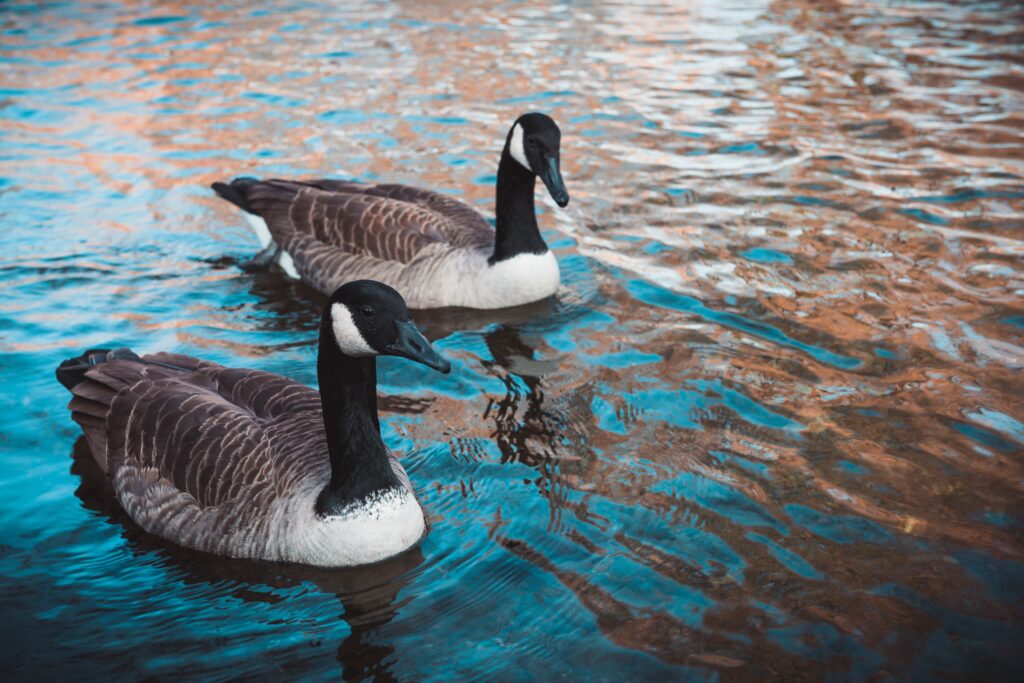
    You can spot the Canada Goose flying overhead in wedge-style formations over houses and parks, resting in ponds around the state. They are long lived and can live 10 – 20 years or even longer. The goose’s distinctive honk is part of the Utah summer soundtrack, right up there with crickets at night and airplanes over the Salt Lake Valley. Canadian Geese are very comfortable around people, so you won’t have a hard time finding them near water. In the winter, they can be seen at times in farmer’s fields scavenging for leftover crops.

    Not all of these birds will leave for the winter, migrations can be complicated, but seeing them appear in everyday life is a signal that winter is ending and spring is on it’s way. When you see the male Goldfinch’s molting and changing into more vibrant colors, you know that sunshine is here to stay. As we approach May, be on the lookout for these and many other types of birds that make Utah such a great place to visit.

  • Where the Seed of Creativity Grows

    Where the Seed of Creativity Grows

    Today, as part of my church’s home-study program called “Come, Follow Me,” we read about the parable of the sower. Without trying to reword a powerful and very old story, here it is as written in the Book of Mathew:

    “Behold, a sower went forth to sow; and when he sowed, some seeds fell by the way side, and the fowls came and devoured them up: some fell upon stony places, where they had not much earth: and forthwith they sprung up, because they had no deepness of earth: and when the sun was up, they were scorched; and because they had no root, they withered away. And some fell among thorns; and the thorns sprung up, and choked them: but other fell into good ground, and brought forth fruit, some an hundredfold, some sixtyfold, some thirtyfold. Who hath ears to hear, let him hear.”

    Mathew 13: 3-9 Holy Bible: King James Version

    In the parable, Jesus speaks about seeds that fall upon different types of soil. Each seed is identical, a potential for growth and life within its core. The ground the seeds fall to, however, differs in receptivity. He offers an interpretation for the different types of ground after the parable. In short, the ground represents the how a person receives His word, if they are willing or not to cultivate it. Today, I am most intrigued by the common theme of superficiality in the types of soil where the seed fails.

    I believe that God wants His children to not only feel faith, but to use it. For me, I choose to express myself through creativity. I perform in shows that tell positive stories, and in my downtime, I love to write. In my novels, I weave in themes found in old religions and mythologies. I hope that by including elements of classic literature, such as the Bible, Legends of King Arthur, Greek Mythology, or even Shintoism, I can capture a magnified sense of humanity. The stories, though fantastic, feel real to me, and their moral elements feel like the offspring of a plant that’s grown out of the seed of my faith.

    So, back to the soil. What can stop the seed of my faith from producing wholesome, creative works? Right now, my thoughts are sketching the image of nasty thorns. These thorns can represent any number of obstacles. Some are the shape of negative emotions, doubtful of my potential for success. Others are thoughts saying that unless I’m earning money, my creativity is worthless and justifies no sort of time consuming effort. The worst and sharpest thorns, though, are distractions: a phone left open on the table next to my keyboard, a show I keep watching during hours I’ve set aside to work, or hours I stayed up late for no reason and slept away a perfectly good morning.

    Maybe I’ll till the ground of my soul a little more, believing in myself and my capabilities for creation and other means of using my faith. It’s time to prune a few thorns.

  • Our Tevye, Chaim Topol

    Our Tevye, Chaim Topol

    What a man, right? Israeli actor Chaim Topol once estimated that he played the role of Tevye in Fiddler on the Roof more than 3,500 times. As the face of Tevye in the movie, many of us claim Topol as our Tevye, the one that got us to fall in love with the story, the face of the simple milkman that people of all cultures can relate to as a parent and person of faith.

    Topol’s recent passing has me thinking a lot about the meaning of the story. Currently, I’m in a local production of Fiddler on the Roof. I’m a semi-professional actor. That basically means that I work a day job but my evenings are all spent on paid and unpaid stages. I’m especially drawn to classic musicals that celebrate times and cultures gone by. Fiddler has been especially meaningful.

    I grew up in a culture of faith, not as strict and orthodox as the faith of Tevye, but similar in how central our traditions are to our identity as children of progenitors who sacrificed more than everything. We talk to God in prayer and perform our sacraments in ways that make us unique as a people.

    So, I really like Tevye. I like the way he talks and laughs with God, how he complains and then reconciles. I laugh at how he flirts with the idea of vanity, that if being rich is a curse, “then may God smite me with it! That I may never recover!” On the other hand (see what I did there) I tear up when he laments for his daughter Chava, “If I bend that far I will break.” He’s a wonderful character.

    Topol’s baritone voice is the quintessential Tevye, the one that sticks to my head whenever I quote “Tradition!” on the regular. It’s hard to pinpoint exactly what makes him so iconic, but in the light of his death I got to thinking about where Topol comes from. His father was from Russia, born a generation after the Pogroms. Topol was born not long after the Holocaust. Surely he must have carried the generational pride and trauma with him as he played out the scenes, carrying the cart and mourning his lame horse. I don’t think I can even begin to pick up all the symbolism in his performance.  

    We’re lucky to have Topol’s performance as Tevye frozen in time in the movie. He’s our Tevye, and though he may be gone, I’m sure the character he helped bring to life for millions of us will live on forever.