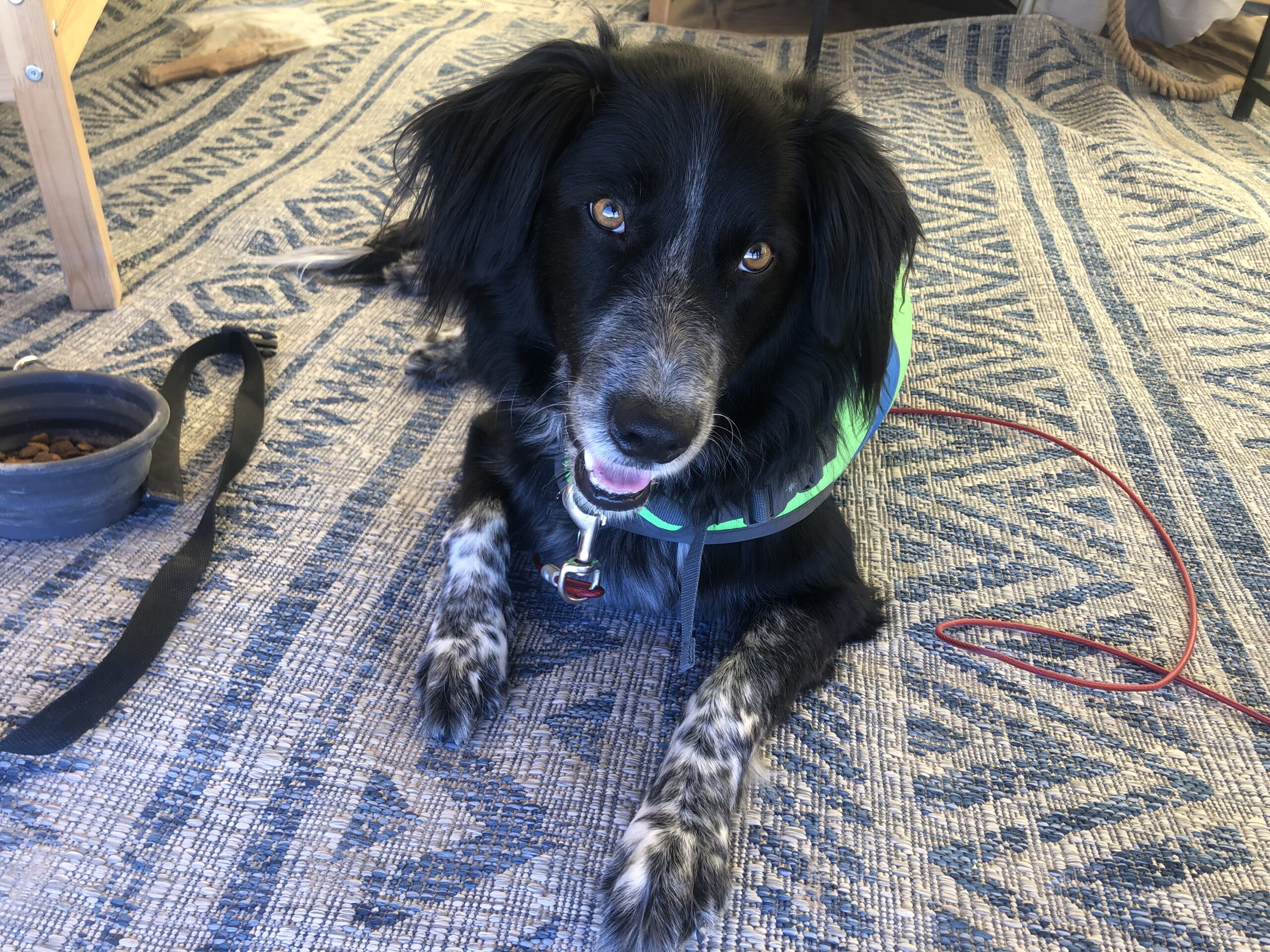
He’s an adopted Border Collie from the county animal shelter. I rescued him in 2019 on National Dog Day when he was 10 months old. I didn’t know it was National Dog Day, but the coincidence was convenient because the shelter waived a whole bunch of fees and I could actually afford him. Let me tell you, don’t be fooled by what you read online, Border Collies like Arthur make the best family dogs.
Not all dogs are the same, even within a breed, so you should evaluate each dog you meet individually. I’ll just tell you about Arthur.
Great with kids
I don’t know if you knew it, but raised properly Border Collies can be fantastic, protective, and loyal to children. They’ve even been known to want to heard them together like sheep in their care. When he was first adopted, Arthur would get nervous when kids would touch him, but after playing fetch with my nephews, he learned that kids were even more fun than adults because they’d play fetch for as long as he wanted to, or even longer, which is insane if you know the endurance of Border Collies.
Built for Adventure
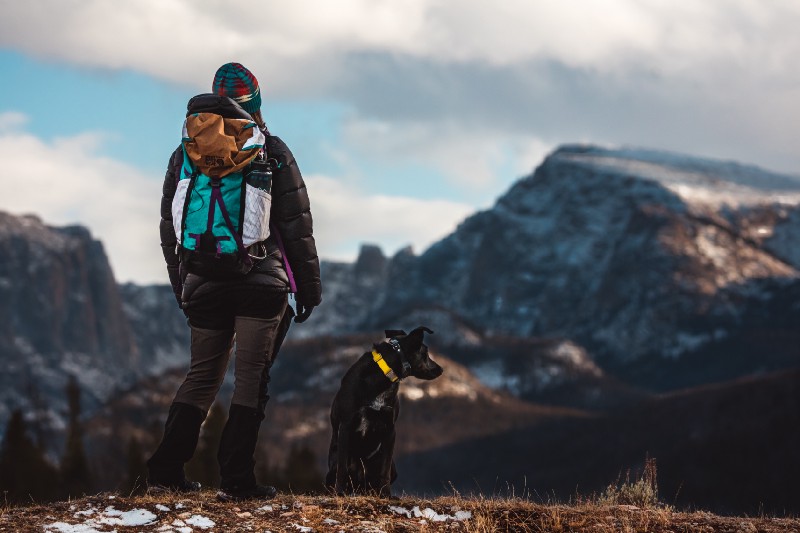
Border Collies are made for the outdoor lifestyle. They love open fields and long hiking trails. Being very obedient dogs, you can take them with you off-leash (where it’s allowed, of course.) They’ll love to go with you almost any place you can imagine. Go ahead and read my article about off-leash hiking for more information. In addition, as herding dogs, they’ll likely see children as sheep they need to keep together, so they’ll help make sure the family stays accounted for on long expeditions.
Well Behaved in the House
As natural working dogs, many people have the misconception that Border Collies are bad house/apartment dogs. My dog Arthur had a hard time settling down at first indoors, but he’s since learned to be very comfortable. We’ve lived in both houses and apartments together, and he knows how to behave. I would recommend crate training, at least for young Border Collies at first because they tend to get extra bored when you’re not around. They’re little smart escape artists and food finders.
Border Collies are extremely attached to their families, so they want to be wherever you are. If you are in the house, they want to be in the house. If they want to be outside, they’ll want you outside with them.
They Love to Cuddle
The heading speaks for itself, doesn’t it?
Photo by Undine Tackmann on Unsplash
Get Down to the Shelter and Adopt
Of course raising a dog from puppy on up is a wonderful experience, but remember to consider adopting from your local shelter. Border Collies are often left in rescues by their owners who don’t understand what kind of amazing companions they can become. Adopting Arthur was the best decision I ever made. So, if you’re on the fence, head down to the shelter and take a Border Collie mix into the playroom. I bet you’ll like what you find.
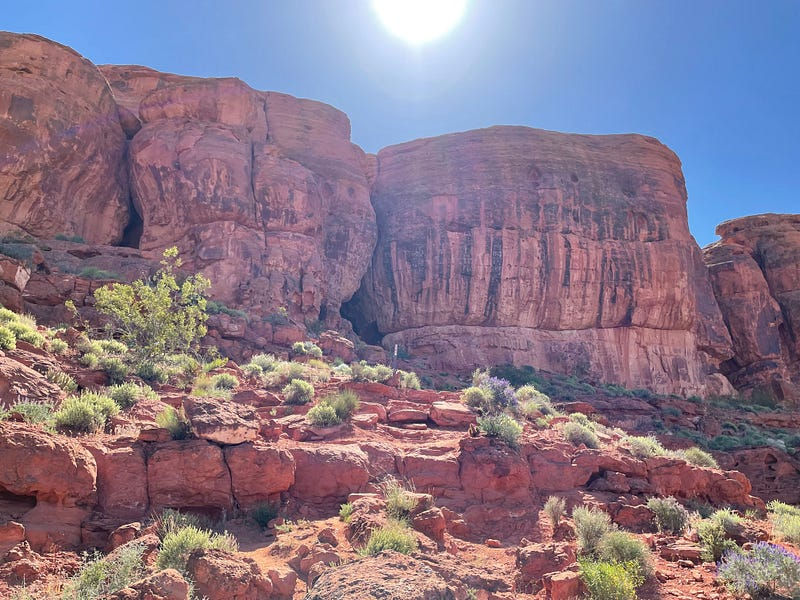
Hiking up to Scout Cave is a simple and short activity to add to your must-visit category in Saint George, Utah. In this article, I’ll sum up where you can find it and some tips and tricks to help you have a good time and stay safe. Scout Cave is dog friendly, unlike many hikes in the area, so we’ll talk about furry friends too.
Difficulty
Before you drive up to Snow Canyon, let’s talk about difficulty. If you are an experienced hiker and climber, Scout Cave will not give you any trouble. However, if you have any health problems or issues climbing a little, you should consult a doctor first. The same goes for your dog. Dogs that can’t climb will need to be carried up a few brief slopes. My border collie had no problem climbing on his own with a little guidance.
Children outside of strollers can hike this trail without a problem, but should be closely monitored and assisted by adults. There are a lot of poky plants around and some insects. In the springtime, I got stung by a bee in the cave.
Photo by Daniel Bradley
Heat and Time of Day
Scout Cave is best attempted in the morning or evening outside of the full blast of the afternoon sun. Dogs with thick fur coats should be watched closely and given plenty of water, as well as their humans. The heat can sneak up on you. It may feel moderate at 9 am and then by 10 or 11 you’re sweating buckets. Try to make it just after sunrise if you can. If you do leave later, it’s best if you leave your dog at home and bring lots and lots of water.
This hike is almost completely without shade except for some trees near the bottom before you reach the stairs.
Photo by Daniel Bradley
Length
Scout Cave is just under 3.6 miles round trip. Apart from a steep climb up some stairs and a few rocks to climb over, the trail is relatively flat and easy going. The terrain is rocks and sand and should be a little cooler for your pups paws than asphalt.
Photo by Daniel Bradley
Driving Directions
Take exit 6 on I-15 onto Bluff Street and turn north toward Pine Valley Mountain. Continue for about 3 and a half miles. Turn left onto Snow Canyon Parkway and keep going for about 4 miles. On Snow Canyon Dr, turn right and continue 1 mile. You will see a Trailhead on your right across the street from where you can park.
The Trail in a Nutshell
The trail is straightforward enough. Cross the street from the parking lot and you’ll see the trailhead. Head toward the mountains in front of you. You’ll pass old lava flows and beautiful desert plant life. Eventually you’ll hit an intersection with the Johnson Canyon Trail. Turn right, following the Scout Cave trail and keep going to where the trail passes under some private housing. Follow the trail down to the area at the bottom with trees and sand.
Photo by Daniel Bradley
Make sure you’re drinking lots of water.
The trail will head back uphill at some stairs. Take your time and be sure to not fall into any cacti. The trail will seem to end, but if you noticed, you’re on your way to the cave. Climb up the rocks and you’ll see that the trail continues upward. After the stairs, be sure to not turn right. There is an illegal trail heading into the canyon and that is not where you want to go.
Photo by Daniel Bradley
Climb on up into the cave and enjoy the view!
Also as I mentioned before, try not to get stung by any bees. My arm was swollen for two days.
Photo by Daniel BradleyPhoto by Daniel Bradley
The cave overlooks the valley below.
Thanks for reading! If you enjoyed this article, find this one and more at:
Have you ever thought you’d like to get in to bird watching? I have that thought every Spring, so I’ve compiled a short list to help us get started. Utah is home to many gorgeous birds, particularly in the Spring and Summer before winter migrations. Whether you’re a Utah native or a visitor enjoying a nice desert or mountain vacation, here are some special avian friends to look out for.
These birds are beautiful, and actually spend a significant part of the year molting. They adopt a blander version of the yellow for the winter to avoid being eaten by predators. They forage on the ground and nest in the trees, so look for them eating in lower vegetation.
The American Robin makes its appearance at the end of winter, hunting for worms across every lawn in the state. Robins are easily distinguished from other birds with their red-colored bellies. They are among the most common birds to find in residential areas, and are very fun to photograph. If you’re lucky, you’ll get a Robin nest in your yard. Be sure not to disturb the babies or the parents during the nesting process, and you can watch the little family grow up!
3. Gull:
Photo by Joe Cox on Unsplash
The Gull, or the Sea Gull, is another common sight in Utah. As the state bird, legend has it that the birds saved early state pioneers. Orson F. Whitney, one of the early settlers, wrote: “When it seemed that nothing could stay the devastation, great flocks of gulls appeared, filling the air with their white wings and plaintive cries, and settled down upon the half-ruined fields. All day long they gorged themselves, and when full, disgorged and feasted again, the white gulls upon the black crickets, list hosts of heaven and hell contending, until the pests were vanquished and the people were saved.” After devouring the crickets, the gulls returned ‘to the lake islands whence they came.’”
Whether by miracle or regular habit, the gulls won their way into the heart of Utah history. Despite the legend, however, they can be a bit of a local nuisance, haunting picnics and trash cans.
You can spot the Canada Goose flying overhead in wedge-style formations over houses and parks, resting in ponds around the state. They are long lived and can live 10 – 20 years or even longer. The goose’s distinctive honk is part of the Utah summer soundtrack, right up there with crickets at night and airplanes over the Salt Lake Valley. Canadian Geese are very comfortable around people, so you won’t have a hard time finding them near water. In the winter, they can be seen at times in farmer’s fields scavenging for leftover crops.
Not all of these birds will leave for the winter, migrations can be complicated, but seeing them appear in everyday life is a signal that winter is ending and spring is on it’s way. When you see the male Goldfinch’s molting and changing into more vibrant colors, you know that sunshine is here to stay. As we approach May, be on the lookout for these and many other types of birds that make Utah such a great place to visit.
You’re out in the middle of nowhere on a beautiful trail into hills of paradise and you decide it’s time. You lean down, your dog smiles up at you. You take off the leash. Your pooch leaps up in delight and runs circles around you, smelling every bush and loving its little life. I love that feeling. My dog and I experience this all the time.
So, is it okay to hike with my dog off-leash? It’s a very common internet question. Sometimes, although we don’t want it to be, the answer is no. Let’s talk about when it’s fine to explore without a leash, and when it’s best to keep it on. You have to think about your dog’s training, personality, and the risks and rules of the trail.
Your Dog’s Behavior
The longer you’re around dogs, the more you realize that each animal is unique. The first thing you should consider when thinking about taking the leash off on a hike is how well your pup is capable of listening to you. Don’t consider the breed, consider your actual dog, its personality and training.
What kind of personality does it have? Is it friendly? Independent? If the dog will make you chase it to get the leash back on or bother other people and animals on the trail, its best if you keep your little friend tethered to your person. That way, you can best control your dog in any situation you may encounter.
The wilderness is an unpredictable place. Let me tell you a story.
One time my dog Arthur and I were hiking up Maple Canyon in Utah. Not even a mile from the campground, a large cat came out of the bushes about thirty feet or so in front of us, some kind of lynx or bobcat that was the same size as Arthur. At first I thought it was a cougar. Before I could call Arthur back, he shot after the cat like it was his new best friend and the two of them tore into the bushes. I was freaked out, but I firmly and calmly called to my dog to come back. He did, happy and unhurt.
I was glad in that moment that I trained my dog to come back when called, or that situation could have escalated into something that I really don’t want to think about.
Keep your dog trained for off-leash activities and you should be fine, but don’t forget that there are always risks.
Risks of the Trail
We’ve started to cover wildlife by talking about my lynx story. Out on the trail, you and your pup can find all kinds of animals. Many of these can view your dog as a threat. Rabies is another thing to think about. If you feel the wildlife risk is too much, what should you use?
The leash! You have a leash. There’s nothing wrong with keeping it on.
Another risk to consider is the terrain of the trail. You and your dog have different capabilities when it comes to climbing up and down rocks or walking next to cliffs. You’ll have to be the judge.
One time Arthur ran past me really fast next to a very steep hill, one of those that’s practically a cliff. He didn’t mean to, but he ran into the back of my leg while I was standing on loose dirt and gravel and knocked me off the side. Luckily, I was able to stop myself a short ways down and climb back up, but not without a scare.
These days, I make sure he’s always in front of me on steep hills. If the trail is too risky we go back to the leash life. That way, he still enjoys the hike and I don’t get knocked into a bottom slide toward oblivion.
Rules of the Trail and Good Manners
Contrary to what you may want, you and your dog aren’t alone on the trail. There are hikes close to me that I love where the way is often too crowded. I have to think about other users of the trail when I think about taking Arthur off his leash.
You see, not everyone likes dogs. They might be afraid or they might have allergies. If the trail is too crowded, you should leash your dog. It’s good manners. Going back to behavior, no one wants the liability of their dog knocking over some poor person they decided to jump on or scaring a cyclist into a tree. Those are just some examples of what could go wrong.
The internet is a great tool to find out the rules of almost any trail. I’ve found close to my house that if a trail is through a National Forest or Bureau of Land Management or something similar, leashes are required in campgrounds or parking lots but dogs can be released once out of those areas. You should check each trail online before you go and follow any posted signs along the way just to be safe. Safe is cool.
Summed Up
Off-leash hiking can be a wonderful experience for you and your dog. However, you should consider the precautions I’ve listed in this article before taking the big step of letting your dog roam free.
Is the dog’s behavior suited for the activity?
Is the trail good for free roaming dogs? (Minimal wildlife encounters, good terrain, etc.)
Are you following the official rules of the trail and considering other people?
If you can answer yes to those three questions, you’re in for some good fun with your best friend. Just make sure you stay alert and responsible. Happy hiking!
If you like articles like this, buy this book! It can help you train any dog and learn the in’s and out’s of dog ownership without getting too complicated.
You’re thinking about going on a hike today. The weather is acceptable and you feel like exploring a trail. Maybe you’re on a trip somewhere new, or maybe the mountain standing outside your kitchen window is telling you to get your couch depressing haunches out the door. Either way, packing lists for hiking whims can be a hassle, so I’m here to let you know what I usually take with me, the items sitting in my bag right now. There might be some that you’ve overlooked or haven’t considered.
If you have anything else that you like to bring that I may have overlooked, feel free to comment! I always love to learn and I’m sure other readers could benefit as well.
Now, in no particular order of importance, let’s dive in.
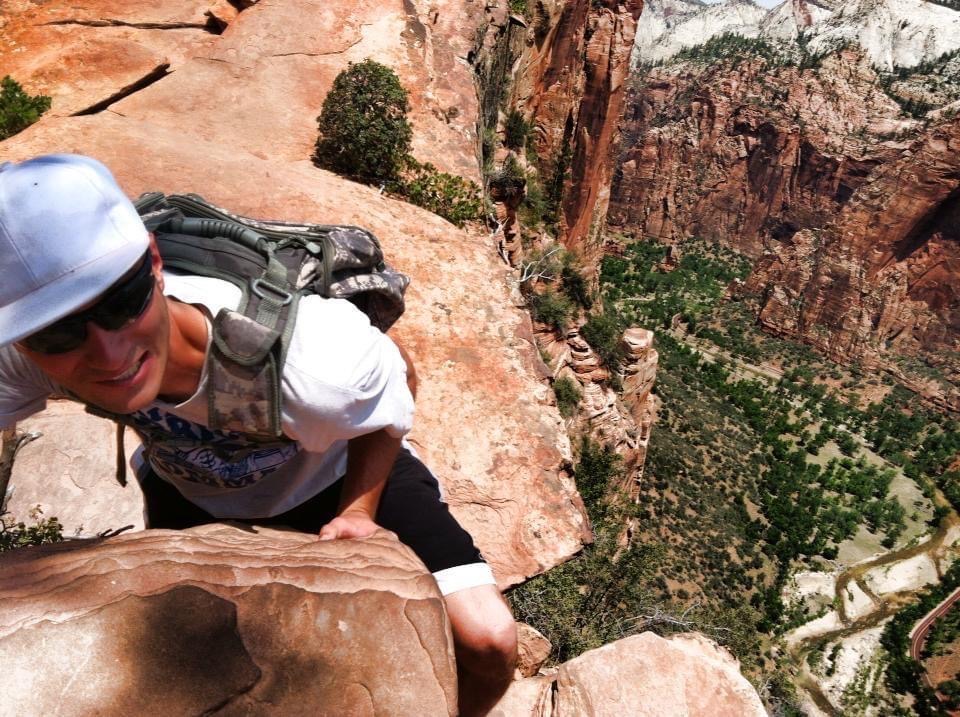
The obvious, right? This is actually something that many people overlook. “I can just hold my water bottle in my hand, right?” Sure, if you like suffering. I’ve taken a lot of people with me on hikes who decide to not bring a pack. They always end up drinking my water and putting stuff in my bag. That’s fine, but remember that the key to a happy life in the outdoors is preparation. You may not need everything in the backpack on any one hike, but why not make your life easier? Ideally, you will be the one to bring a backpack.
2. Water Container
Part 2 of the obvious. Whole books could be written on why a hiker should stay hydrated, even on a short hike. If not for emergency preparedness alone, bring water. Even if it’s -20 degrees, bring water. The best you could do for yourself would be at least 2 liters in some kind of hydration pack that you can suck straight out of your bag. If you’re a canteen person, I can understand that too. Either way, try to bring more than you will need. Your shoulders can deal with the weight, your cells cannot deal with dehydration.
3. Snacks
Snacks are great for mood. Hangry people don’t enjoy hikes nearly as much as the smiling bringer of a good trail mix. I would also recommend gummy bears. They’ve gotten me through long walks in the woods and sweaty days of heavy construction. However, if you’re stomach doesn’t like them, see number 12.
4. Flashlight
No, the light on your phone rapidly dying out of cell service doesn’t count. Rolling your ankle in a pothole or slamming your shin on a rock when it got dark earlier than you thought it would is a horrible experience. Yes I am speaking from the comedic perspective of my own past mistakes.
Red light capable flashlights are my favorite. They have less of an effect on your night vision.
5. First Aid Kit
Next to dogs, alcohol wipes and band-aids are humanity’s best friend. Beat that infection.
6. Knife
Besides looking cool, life will one day present a situation where you wished you had one, even if it’s just opening the store-bought flashlight package (batteries hopefully included).
7. Cord and Duct Tape
I bundled these together in the interest of gear reparation. If your bag breaks, you can get inventive with both of these.
In the military, we used something called Det Chord… just kidding, that was something else… 550 Paracord. Paracord works great for helping repair broken straps and securing items you really don’t want to lose like compasses, monocular, etc.
8. Monocular
Alright. You might prefer binoculars, but right now I’m a fan of my monocular. It’s so convenient and fast to use if I want to get a closer look at a hawk flying over or a coyote I’ve spotted down a hill. I love wildlife, and every time I forget to bring my monocular, I see something cool far away and throw up my hands in real dismay.
9. Compass
Once again, your phone doesn’t count. At this point we’re venturing deeper into emergency preparedness zone. Getting lost is the worst experience that you do not want to have and it can be life threatening. Get a compass, learn how to use it, and if you want a map to go with it… that can only be a good idea.
10. Cell Phone With Extra Battery
I’m starting to feel bad for insulting cell phones too much. There are hundreds of apps like plant identifiers, maps, and music that can all enhance your experience.
If you get lost, you can find a hill with service and use the phone to get your life saved. That would be epic, but once again, getting lost is never recommended. Remember I told you that.
11. Identification
It’s a sad topic, but if anything happens to you, identification goes a long way to helping your people.
12. Toilet Paper and E-Tool
Do I have to elaborate on this? Fine. One time I went hiking up a mountain near my house. It was only a couple of hours. I don’t know what it was, maybe the gummy bears, but I cursed myself the whole way down for not bringing what I knew I should have brought. Never again. Wilderness dumps happen to the best of us. On that note, a little shovel to bury the waste is good manners, and the law. Look up your local regulations. Also, campground firepits are no place for these things. I can’t tell you how often I’ve seen the aftermath. It makes no sense.
13. Sunscreen
Your skin will always burn easier in the mountains no matter who you are. It’s an altitude thing, so just put it on. No, don’t make that face. Everyone is doing the sunscreen thing these days. It’s cool.
I’ve taken you through my current setup. Things that haven’t made this list that I often think I should maybe get include:
Bear Spray/Bell, Space Blanket, Whistle, GPS.
I ran into a bear with my friends a little while ago, so now they’re on my mind.
Last but not least of the honorable mentions if you’re bringing a pet: water, food, protective boots, and a LEASH. More on this to be found in other articles.
In Conclusion
Hiking is glorious. It brings peace, adventure, and exercise into one fantastic experience every time you go. Bring the right supplies, and you can enjoy your time outside with minimal suffering. Now that you feel a little more enlightened, get out there!